CTAs Inside 3D Tours: Booking, Inquiry, and Lead Capture
Place CTAs inside 3D tours where visitors have enough context to book, inquire, compare, or request the next step.

Place CTAs inside 3D tours where visitors have enough context to book, inquire, compare, or request the next step.
The CTA should match the point in the tour where the visitor has enough context to act.
Short answer
A CTA works better when it follows understanding, not when it interrupts the first view.
The CTA should match the point in the tour where the visitor has enough context to act. A useful test is simple: can someone open the tour, understand the place, and know what to do next without a separate explanation?
Real Horizons supports the full Spatial Studio workflow: generate high-quality Gaussian splats from smartphone video, 360 cameras, 360 drones, standard drone footage, DSLR/photo sets, or mixed media, then turn the result into a guided browser tour with waypoints, labels, hotspots, embeds, CTAs, and analytics.
How to judge the workflow
| Area | What to check | Why it matters |
|---|---|---|
| Orientation | Start where the visitor understands the space. | A confusing first view loses people quickly. |
| Guidance | Use waypoints, labels, and hotspots. | The tour should answer questions in order. |
| Conversion | Place CTAs where the visitor has context. | Measure opens, clicks, and source campaigns. |
Practical checklist
- Use one primary action per tour.
- Place inquiry actions near strong rooms or amenities.
- Keep labels direct: book, inquire, schedule, contact.
- Test mobile placement.
- Track CTA clicks by tour source.
Where this fits in a Real Horizons workflow
Use the capture source that fits the job, then use Real Horizons to generate the splat, review the result, and turn it into a tour the audience can open without extra explanation.
For a property, that may mean named room stops, finish hotspots, an inquiry CTA, and a link the agent can send. For a hotel, venue, campus, museum, or construction site, it may mean guided zones, access notes, booking context, or stakeholder comments.
The capture is the input. The generated splat is the spatial asset. The published tour is the deliverable clients and visitors actually use.
Why Real Horizons is different
Real Horizons brings cloud Gaussian splat generation and guided tour delivery into one workflow. Spatial Studio supports captures from smartphones, 360 cameras, 360 drones, standard drones, DSLR/photo sets, and mixed media, then helps teams review the scene, add context, publish the tour, and measure visitor actions.
The value is the combined workflow: generate the splat, review the scene, set the opening view, add guided stops or hotspots, publish the browser link, and measure whether visitors actually use it. For teams comparing Scaniverse, Splatica, Polycam, Matterport-style scans, or standalone viewers, the practical comparison is quality, input flexibility, pricing, and how much work remains before the result becomes a client-ready tour.
Common mistakes
- Judging the result only inside a raw viewer.
- Forgetting the first view, so visitors open into a confusing angle.
- Adding too many labels instead of a clear route.
- Sending a heavy scene without testing a normal phone.
- Treating the same capture method as right for every project.
Published-tour checks that matter
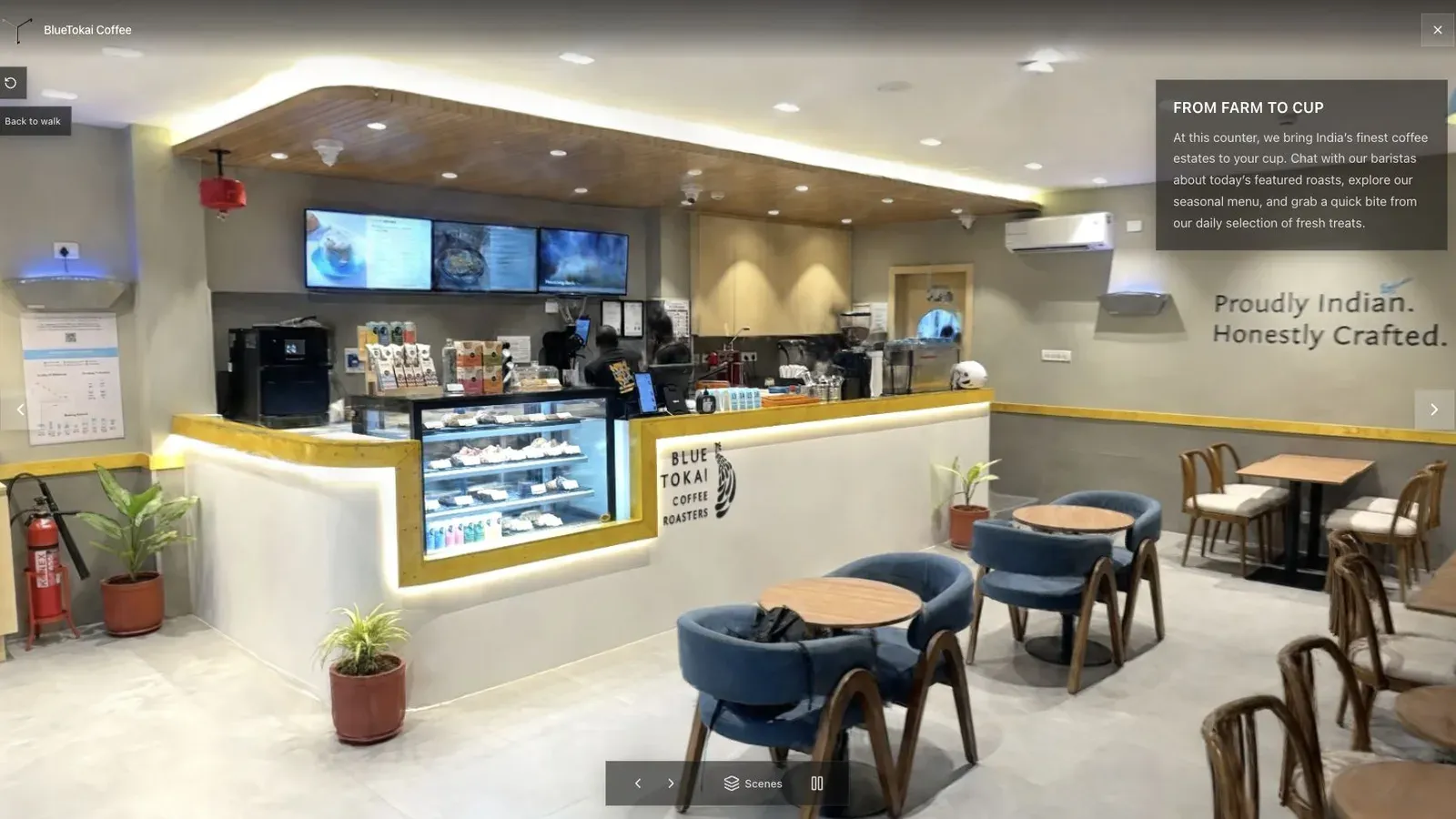
A published cafe tour gives visitors a clear first view before they move through the space.
After generation, tour authoring turns the spatial asset into a usable experience. The first view should explain the space, the bottom or side navigation should make the route clear, and any labels should help visitors make a decision instead of decorating the scene. The finished tour should feel like a useful browser page, not a file preview.
Review the published link the same way a visitor would. Open it on desktop, then on a phone. Check whether the tour title, waypoints, hotspots, CTA, and surrounding context still make sense without a sales person explaining it. If the main action is hidden or the first view feels random, revise the tour before embedding it on a landing page.
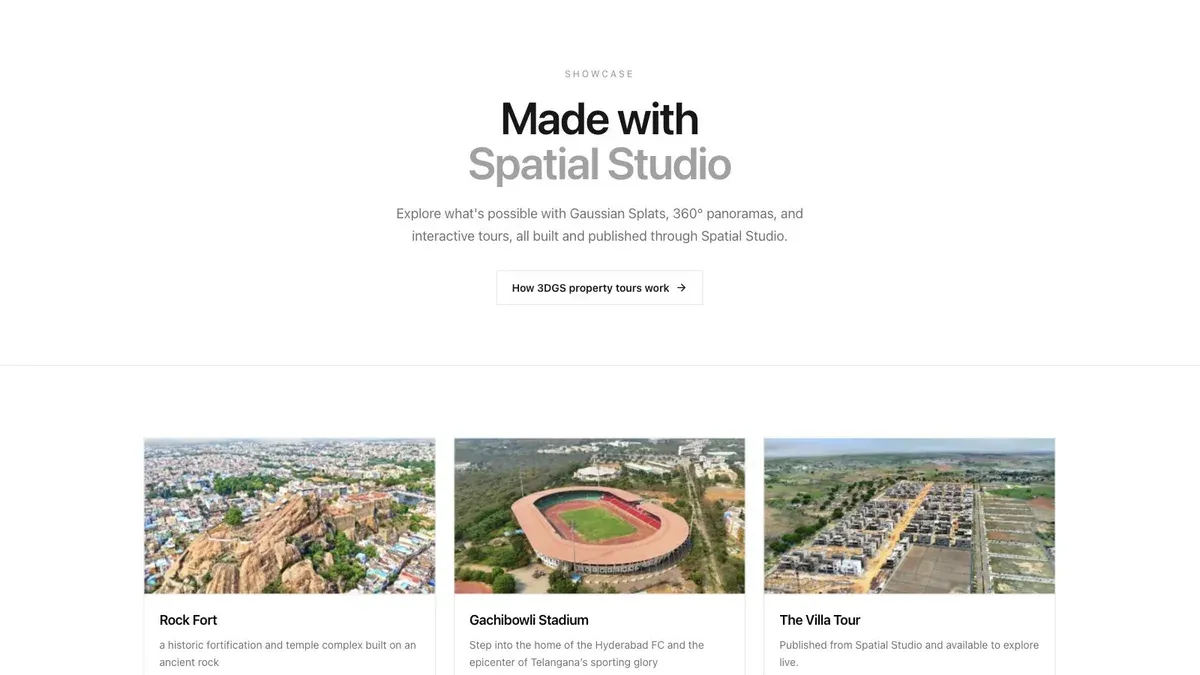
A showcase grid lets buyers or clients scan several finished tours before opening one.
Before launch, do one pass through the published tour: preview the opening view, copy the share link, test the embed, confirm the CTA, and decide which events you will track. Those checks catch the issues visitors notice first: a weak start, a hidden next step, or a link that works on desktop but not on mobile.
A finished tour should connect the visual result to a measurable action: a booking click, inquiry, embedded listing view, or stakeholder share. For the broader workflow, read Splat Virtual Tour Software and Gaussian Splatting for Real Estate.
The page around the tour should make the next step clear. Explain what the visitor can inspect, why the first view matters, and whether the right action is booking, inquiry, download, or sharing with a teammate.
Related reading
Frequently asked questions
Can this workflow support client work?
Yes, when the workflow is matched to a real visitor need. It should produce a tour, link, embed, or sales asset that someone outside the production team can use.
What should I check before using this on a paid project?
Check capture quality, mobile load behavior, first view, labels, hotspots, and the CTA path. A quick internal test prevents a weak client handoff.
Where does Spatial Studio fit?
Spatial Studio brings cloud splat generation and tour authoring into one workflow: upload source media, generate a Gaussian splat, review the scene, add guided context, publish a browser link, and track visitor actions.
Does every project need a Gaussian splat?
No. Photos, 360 panoramas, and video can still be the right answer. Use splats when spatial movement and depth help the visitor make a better decision.
How should I measure the result?
Track tour opens, source campaigns, waypoint use, hotspot clicks, CTA clicks, and follow-up quality. Those signals matter more than the file format alone.
Next step
Pick one real space, capture it carefully, generate the splat in Real Horizons, publish it as a guided tour, and judge the result by whether a visitor understands the place and takes the next step.
Next step
Open the related workflow.
Review live examples or move straight into the matching Spatial Studio flow.
Continue reading
Related articles
Tour Publishing
360 Tour vs Gaussian Splat Tour
Compare 360 tours and Gaussian splat tours by capture speed, viewer experience, mobile performance, embeds, and sales use.
Read articleTour Publishing
3DGS Virtual Tour Guide
Build a 3DGS virtual tour with a clear first view, waypoints, labels, hotspots, CTA, embed, and analytics plan.
Read article